
A sudden toothache or an unexpected injury to your mouth can turn an ordinary day into a stressful situation. Dental emergencies can happen at any time, and knowing how to respond can make a big difference in preventing further complications. Whether it’s a broken tooth, a severe infection, or a knocked-out tooth, being prepared can help you take quick action before you reach a dentist.
Types of Dental Emergencies You Shouldn’t Ignore
1. Toothaches That Won’t Go Away
Toothaches can be caused by several issues, including cavities, infections, or gum disease. If you experience persistent pain, rinse your mouth with warm water, gently floss to remove debris, and take over-the-counter pain relief if necessary. However, severe or prolonged pain could indicate an underlying infection that requires immediate attention.
2. Chipped or Broken Teeth
Biting down on something hard or experiencing trauma to the face can cause teeth to crack or break. If this happens, rinse your mouth with warm water and try to save any broken pieces. Applying a cold compress can help reduce swelling, but it’s important to see a dentist as soon as possible near you in Panama City to prevent further damage.
3. Knocked-Out Tooth
A knocked-out tooth is one of the most urgent dental emergencies. If possible, retrieve the tooth, hold it by the crown (not the root), and rinse it gently without scrubbing. Try to place it back in the socket or store it in milk or saliva to keep it moist. Seeking immediate dental care increases the chances of saving the tooth.
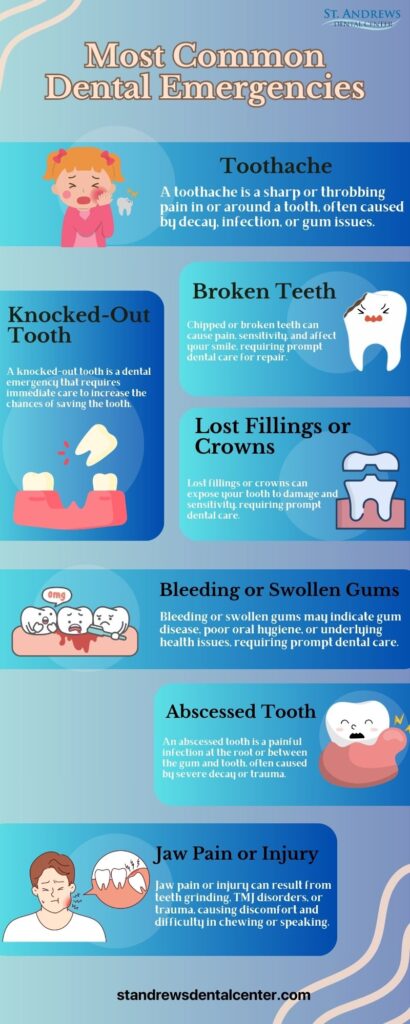
4. Lost Fillings or Crowns
Fillings and crowns protect teeth from damage and decay. If one falls out, the exposed tooth may become sensitive or painful. Until you can see a dentist, use dental cement, sugar-free gum, or even petroleum jelly to cover the area and protect it from further harm.
5. Abscessed Tooth
A tooth abscess is a serious infection that can cause severe pain, swelling, fever, and even lead to life-threatening complications if untreated. If you notice a pimple-like swelling on your gums, pus, or a bad taste in your mouth, seek immediate dental care. Rinsing with warm saltwater may help manage pain temporarily, but professional treatment is necessary.
6. Bleeding or Swollen Gums
While minor gum bleeding during brushing can be common, excessive or persistent bleeding may indicate gum disease or another serious issue. If bleeding is severe, apply gentle pressure with a clean cloth and contact a dentist for an evaluation.
7. Objects Stuck Between Teeth
If something gets lodged between your teeth and causes pain, try flossing gently to remove it. Avoid using sharp objects, as they may damage your gums or teeth. If the object remains stuck, a dentist can safely remove it without causing harm.
8. Jaw Pain or Injury
A fractured or dislocated jaw requires urgent medical attention. If you experience difficulty moving your jaw, severe pain, or swelling, apply a cold compress and seek professional care immediately.
What to Do in a Dental Emergency
When faced with a dental emergency, staying calm is key. Acting quickly and knowing the right steps to take can prevent complications. In most cases, seeking prompt care from a dental professional is the best course of action.
If you are in Panama City and dealing with dental emergencies, getting the right treatment fast can help save your teeth and relieve pain. At St. Andrews Dental Center, our experienced team provides emergency dental care to address urgent issues with compassionate and prompt service. Schedule your emergency appointment today!
Related blog: How To Care For Your Tooth After A Root Canal Procedure